I was skimming through my notes and the textbook to see what I have learned about whole numbers. There are just too may terms for me to digest and the tricks to solving it. Nonetheless, computing whole numbers using the base-ten grouping concepts leave a deep imprint. It reminded me about a teaching strategy of using the ten frames such as the plastic egg carton. It is really creative to use recyclable items as part of the learning process. Some children were able to subitize when they see objects being sparsely presented to them. They are able to 'see' by attaching an amount to the quantities given. I believe children who are able to subitize comes in the category of advanced learners. Whereas, the struggle learnes might need help in counting the objects up to 10. Hence, they will manually count the objects according to one to one correspondence in groups of tens. The balance of the objects will fall in the section of ones. Teachers may want to provide direct modeling by allowing them to write the numbers for memory support. As mentioned by the authors, direct modeling gives children a background of ideas and support those struggle learners who are not ready for advanced strategies.
Sunday, 22 July 2012

1 post, 2 questions and 3 things I've learned
1 post: This post is to summarize my learning for the module we have with Dr Yeap. Amazing Math journey that squeezes my brain juice every night. Honestly, I had headaches every night and the minute I lay my head on the pillow, I dozed off to my lala land. It really dragged me to critical thinking and sometimes it caught me off guard. There are so many misconception about this subject which I wish I am able to change back then. I am always a struggle learner in Mathematics. Learning the theories and secrets to solving problems leave me in angst because we were told otherwise by our former teachers. I really hate Math but after realizing the mistakes our former teacher had made, I guess we better make changes like NOW!
2 questions:
3 things that I've learned:
- How do I know they've learned it?
- What if I have a struggle learner?
- What is I have an advance learner?
2 questions:
- How do we convince our employers/principals/staff/colleagues on these misconceptions and encourage them to change in order to provide children with holistic education?
- The 3 levels to assess children's level of understanding; ermerging, established and extending. Can these terms be use only in the subject Math? Or can we use it for other learning areas like Language and Literacy or Motor Development?
3 things that I've learned:
- I have learned about the misconception of Mathematics and it has gradually lift up my hatred for the subject. There are so many errors and changes educators need to take note and improvise. We do not want to teach children the wrong things because eventually they are going to grow up with all these experiences either loving or loathing them. We do not want our future generations to have the same misconception as us and we want them to grow up enjoying their learning moments.
- The 4 questions that teachers need to take note when planning a lesson. Mathematics is a vehicle, not a destination (Dr Yeap, 2012). Therefore, Math lesson should be planned purposefully as it will give them the opportunities to present their big ideas. As teachers, it is a good chance to assess children by planning and creating room to either enhance or extend the child's learning. It is so important for us to ensure they learn what they need to learn and not miss out any. The 4 questions I aforementioned:
- How do I know they've learned it?
- What if I have a struggle learner?
- What is I have an advance learner?
- Lastly, it's about differentiated instructions. I understood that teachers provide children with differentiated instructions based on their level of understanding and abilities. Differentiated instructions need not only focus on mathematical objectives but it can narrowed to various developmental areas. One of the videos Dr Yeap showed us with the primary school kids have gave me great insights about differentiated instructions. I can clearly observed and make remarks on his actions and words as we discussed it as a class. He was sure about the instructions each child needs and the implemented it accordingly without having to struggle with classroom managements or materials. He sure knows what he was doing. He's one person that has inspired me to slowly embraced Mathematics with an open mind.
Saturday, 21 July 2012
Mathematics with Technology
With the existence of SmartBoards in class, it makes teaching more animated and fun. Children enjoy manipulating and exploring Mathematics using the SmartBoards. It comes with 4 different coloured pens for children to move the icons around while answering questions. They can also use the pens to write or draw their thoughts about the problem.


I had invested my time for my 5 year olds when I taught them the concept of addition and subtraction towards in term 3 and 4. They were able to drag the icons in and out of the frames in order to add or subtract. I have created my own problems prior to the lesson which revolves around the numbers from 0 t 10.


I can really see the difference when technology takes charge of learning. Children became excited as they were not given much exposure in manipulating one. Albeit being in the 21st century, a country that is face-paced, not every kindergartens or child care centres have the luxury of owning a SmartBoard or the budget to purchase technology-based materials for children's learning. Before the SmartBoard were bought, I will usually use Math manipulatives or the counters to teach addition and subtraction. I coul see the difference in the children's responses and thinking. As they see the animation, they are motivated to solve it correctly which inadvertently send them to a stage of multiple perspective. Children get to learn that computers too make mistakes. This is because as times, the program is unable to compute the amount accurately and they were able to see the mistakes. In my opinion, I will call it incidentall learning. Technology has helped me to capture the children's attention, to invite the children in thinking critically in order to see the sums in many angles and it has motivated children who are afraid to commit mistakes.


Thursday, 19 July 2012
Out of control
So today's lesson was funnily interesting and intriguing. I really liked the hands-on learning where we get to explore and manipulate with materials provided. I felt that I was behaving like a 5 year old trying to figure or solve the problems together with my friends. So we talked about rates, ratio and measurements in terms of geometric.
And here comes the reason why some of is began wacky, confused, stumped and bonkers. Just a statement as simple as this can cause so much commotion in class; "A square is a rectangle." It really affected us a learner and a teacher. Frankly speaking, I was not taught the rationality of this polygon but only now. Gosh! I only unveiled the fact when I'm 23 years old. What have I been doing all these while??
I believe as a teacher, it is not a sinple task to explain to the young children. Maybe.. Maybe the ones with higer thinking order might be able to grasp the fact that a square is a rectangle. That reminded of me about buying assessments for the K2s. How am I able to link these two topics together in wee hours? Ahh.. I'm all lost. Hahaha. Okay, back to business. It is because parents gave their K2s assessments without ensuring if they understood what they are doing. They relently complete the sums and problems using the rote methods. Same goes to teaching children that square is rectangle. We can ask children to memorize the statement but are they able to comprehend the deduction of it? That's the big issue now. Or else we early childhood educators are not doing enough.. :(
Wednesday, 18 July 2012
Counting... 1... 2... 3...!!
Chapter 11 discussed about the importance of counting as it plays a major role in constructing the base-ten ideas about quantity and linking concepts to numbers and number words. Counting comes in 3 process which is counting by ones, counting by groups and singles and couting by tens and ones.

On our first lesson, Dr Yeap has mentioned a few terms we have learned about Mathematics and counting by ones will be according to cardinality which is quantity. Usually, on the ground level as a teacher or a planner, we call counting by ones as counting on one to one correspondence or counting one to one reliably. The counting concept triggers my experience with my 3 year olds where they are learning how to count from one to ten. I have been teaching them counting without inserting the variable in. After we count the total number of animals for instance, they were not able to tell me the total number despite providing them with varied questions. However, when I did storytelling which requires them to count the number of worms the bird has eaten as such, "Let's count together shall we? 1 worm, 2 worms, 3 worms, 4 worms, 5 worms. How many worms did the bird ate?" Surprisingly, they were able to answer faster than usuals. I am not sure how it can possibly happen or was it just coincidental?

Monday, 16 July 2012
Inspirationally Interesting
What's interesting today? Ermm... Learning how to differentiate the terms Dr Yeap has introduced to us earlier this evening. It was a mind-boggling night identifying the meaning of the terms such as ordinal, cardinal, norminal and measurement numbers. They seem the same but interestingly, they either overlapped one another or ambiguosly differently. As a teacher, we need to know what are the learning objectives we want children to achieve at the end of the day. Have we chose the appropriate materials or arrange the learning environment to support learning or have we picked the right kind of tasks for children to complete? As far as we are inspired by the successful educators, it is sometime impossible to implement things we know that are right and beneficial to our children. This is especially when we are working under a big organization where the curriculum and learning environment are planned across the level.
Well, it has been an inspirational night inspiring myself with so many techniques or methods to solve a problem. Dr Yeap has captivated me throughout the lecture. He changed my perception on how Mathematics can be taught or solbed. I am moved to see how educators are upgrading and improving themselves to approach children in a correct manner. Therefore, we used all kinds of theories to prove to parents or the public on how children acquire skills and concepts. One of which that I find interesting is the CPA theory; Concrete Pictorial Abstract. This theory really makes sense to me as both learner and teacher. It is something for me to consider when I am teaching Mathematics with my children.
Well, it has been an inspirational night inspiring myself with so many techniques or methods to solve a problem. Dr Yeap has captivated me throughout the lecture. He changed my perception on how Mathematics can be taught or solbed. I am moved to see how educators are upgrading and improving themselves to approach children in a correct manner. Therefore, we used all kinds of theories to prove to parents or the public on how children acquire skills and concepts. One of which that I find interesting is the CPA theory; Concrete Pictorial Abstract. This theory really makes sense to me as both learner and teacher. It is something for me to consider when I am teaching Mathematics with my children.
Thursday, 12 July 2012
Chapter 2
Chapter 2 has brought us to an exploration of
knowing and doing Mathematics. Theories were discussed and showed how children learn
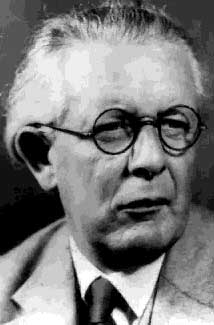
generally. I seem to like the constructivism theory by Jean Piaget where
children construct knowledge using cognitive schemas to create learning. In
addition, I agree to a large extent that children learn through assimilation
and accommodation. We cannot underestimate the power of prior knowledge because
it can be used for children to relate their learning in order to fit new concepts
into the existing network. So does it mean that without prior knowledge the
children will not learn? NO. Children will still be able to absorb learning
when the brain decided to replace new concepts with existing schemas.

Talking about English Language Learners (ELL),
children with special needs, gifted or learning disabilities, it reminded me
about a boy in my class who is recently diagnosed with mild Autism. His
comprehension level falls below average than a normal child. Somehow language
barrier has caused teaching to be tad arduous. I have to modify and make
adaptations in order to fit into his level of learning and understanding. I
managed to conduct one to one session with him but I have concerns that the
author has identified which is abandoning problem-based strategies. I was
wondering if there are any ways I can do to ensure that I implement these
strategies if I amend and make adaptations.
At the same time, the book mentioned about multiple
representations and as both learner and teacher, I am able to relate to my
experience about number bonds. As a child, I am able to ace number bonds
through multiple representations despite rote learning. It was back then when
rote learning and memorization techniques were dominating the teaching industry.
Now, when I became an early childhood educator, I am able to provide children
with hands-on experience to learn number bonds. I think educators are familiar
with number bonds but asking them to present it in different methods may take a
while. In Singapore, we have used unifix cubes or various counters
(transportation, teddy bears, fruits etc.) for children to have concrete
learning experience and to make learning fun.
The video below was taken from YouTube featuring Dr
Yeap (Yes! My lecturer!). I stumbled upon this video as I was searching for
teachers teach number bonds in Singapore. He has explained why Singapore leads
the world in Early Mathematics. He has brought up questions that are relevant
to our career as teachers.
Monday, 9 July 2012
Chapter 1
Fractions,
measurements, decimals, addition and subtractions… These are some of the Mathematical
concepts that I used to learn as a child. Now, these concepts still exist but
the instructional approach differs. Teaching Mathematics in the 21st
century uses ample hands-on experience for children to explore and learn. As
educators, we are trying our best to stay away from rote learning or memorizing
techniques. We want children to possess rich learning experience with
positivism.
NCTM has presented to us in a dissimilar manner in bringing quality to the Math curriculum. In my opinion, curriculum specialist in Singapore can adopt some of the principles or the process standards. They can integrate, adapt or make slight changes to fit into our local context. Recently in June, the news came shocking Singapore when we were ranked 30th in 45th countries for our preschool qualities and one of which is our curriculum guidelines. This is one of the many factors the authorities need to look into and create fair changes to gradually increase its standards.

Frankly
speaking as a learner, I loathe Mathematics as young as 6 years old. I
remembered how I was called out in front of the class for failing
multiplication and division test. My parents were informed about how badly I
have done for the paper. I was mortified. This experience affected the way I
accept and learn Math. I have seen it as a subject that is difficult to
comprehend. I am frightened when I see numbers and solving problems is a
nightmare. Therefore, Chapter 1 has discussed about teacher of Mathematics. I
find it interesting and captivating to list some main characteristics a teacher
should possess before teaching Math. My past experiences affected the way I
perceive Math and it has influenced how I reached out to my children. This is
because I had concerns about teaching strategies when I firstly step into the
teaching industry. I agree to a large extent that a teacher should arm herself
with a positive attitude towards Math. I believe I need to change myself before
changing anything else. It is mentioned that changing is easy and long-lasting if
I develop my knowledge on it and experiment new ideas to approach problems. It’s
worth the try, I guess.
NCTM has presented to us in a dissimilar manner in bringing quality to the Math curriculum. In my opinion, curriculum specialist in Singapore can adopt some of the principles or the process standards. They can integrate, adapt or make slight changes to fit into our local context. Recently in June, the news came shocking Singapore when we were ranked 30th in 45th countries for our preschool qualities and one of which is our curriculum guidelines. This is one of the many factors the authorities need to look into and create fair changes to gradually increase its standards.
"Now, today, some children are enrolled in excellent programs. Some children are enrolled in mediocre programs. And some are wasting away their most formative years in bad programs....That's why I'm issuing a challenge to our states: Develop a cutting-edge plan to raise the quality of your early learning programs; show us how you'll work to ensure that children are better prepared for success by the time they enter kindergarten. If you do, we will support you with an Early Learning Challenge Grant that I call on Congress to enact."- President Barack Obama, speaking to the Hispanic Chamber of Commerce, March 10, 2009
Subscribe to:
Posts (Atom)